

THE ULTIMATE BEGINNER’S GUIDE TO
Choosing Diamond Nail Drill Bits
Everything You Need to Know Before You Drill
If you’re just stepping into the world of professional nail care, nail drill bits can feel incredibly overwhelming. There are dozens of shapes, materials, and grit levels — and picking the wrong one can damage the nail plate or leave a finish that’s far from salon-quality.
The good news? Once you understand two key things — grit level and bit shape — the rest falls into place naturally. This guide breaks it all down in simple, beginner-friendly language. By the end, you’ll know exactly which Brunson diamond nail drill bit to reach for, and why.
What Are Diamond Nail Drill Bits?
Diamond nail drill bits are precision filing tools coated with abrasive particles and used with an electric nail drill (e-file) machine. Unlike carbide bits — which cut using metal flutes — diamond bits work by gentle abrasion, making them ideal for more delicate tasks.
Diamond bits are commonly used for:
- Cuticle care and clean-up around the nail fold
- Removing shine from the natural nail plate before gel application
- Smoothing and refining gel, acrylic, or dip powder overlays
- Shaping and filing the nail edge
- Backfill blending and maintenance work
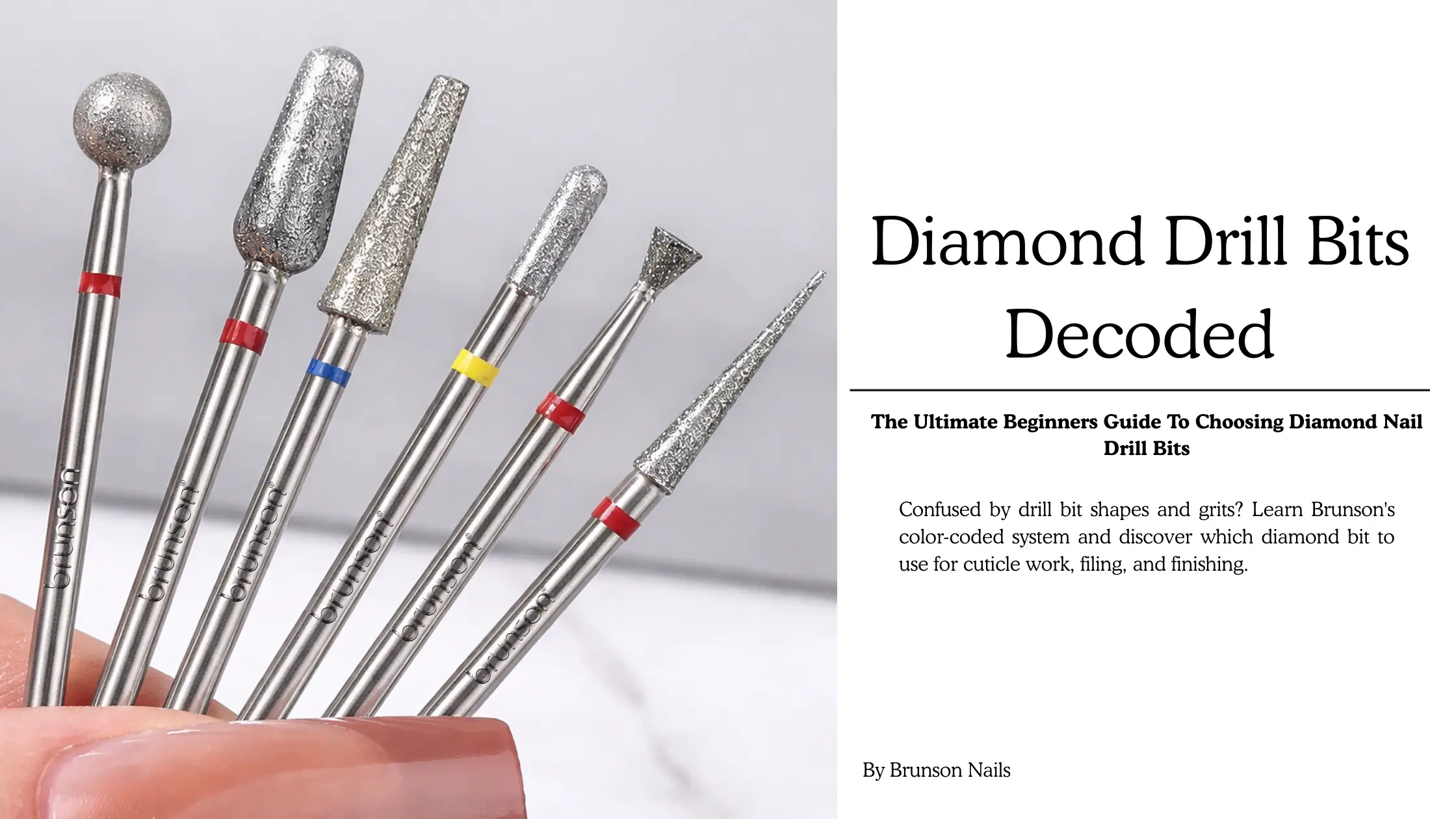
The single most important concept when working with diamond bits is grit — the coarseness of the abrasive surface. On Brunson bits, grit level is communicated through a simple, color-coded band system that removes all the guesswork.
Brunson’s Color-Coded Grit Guide
Every Brunson diamond nail drill bit features a colored band near the shank. This color tells you exactly how coarse or fine the bit is — at a glance. Think of it like sandpaper: higher grit = smoother finish. Lower grit = more aggressive removal.
| Color Code | Coarseness | # Grit |
|---|---|---|
| Black | Extra Coarse | 80–100 |
| Purple | Coarse Grit | 100–130 |
| Green | Coarse Grit | 140–170 |
| Blue | Medium Grit | 200–230 |
| Red | Fine Grit | 400 |
| Yellow | Extra Fine Grit | 600 |
As a beginner, your safest starting point is red (400 grit) or yellow (600 grit) for gentle finishing work. Leave black and purple grits for experienced technicians handling heavy product removal.
Common Diamond Bit Shapes & What They Do
Grit controls how aggressively the bit files — shape determines where and how you can use it. Here’s a guide to the most important shapes in the Brunson diamond bit collection:
Ball / Round Bit
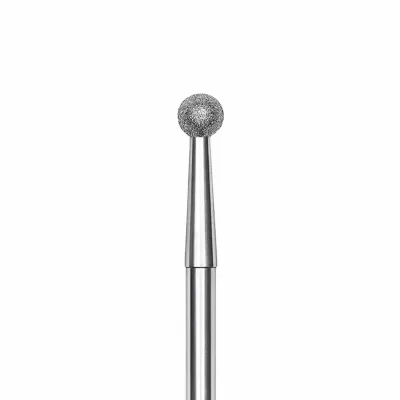
The most beginner-friendly shape. Its round tip reduces the risk of accidentally breaking the skin, making it ideal for cuticle clean-up and working around the sidewalls and under the free edge.
Cone / Tapered Bit
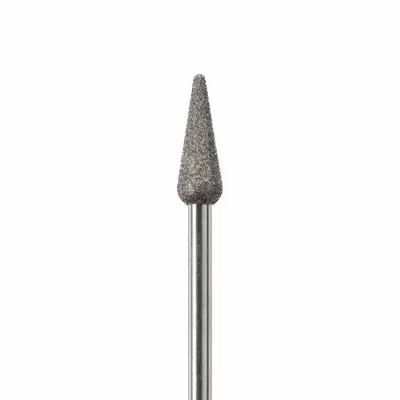
Tapered to a point at the tip, this bit is designed for the lateral nail folds (the skin on either side of the nail). It lets you access tight corners and the proximal fold with precision.
Barrel / Cylinder Bit
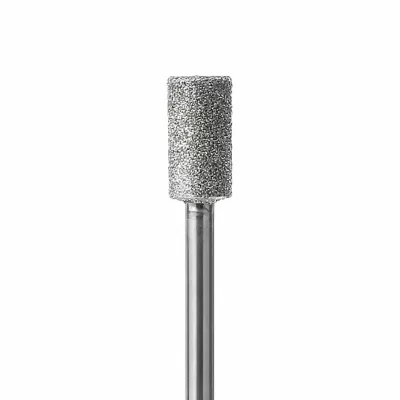
A versatile all-rounder. Use the barrel for surface filing, thinning down product across the nail plate, and general smoothing. A staple bit for any nail tech’s kit.
Flame Bit
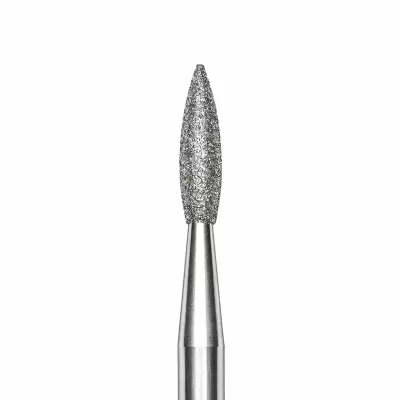
The elongated flame shape is designed for working under the free edge and cleaning the hyponychium. It’s especially popular in Russian manicure techniques for precision cuticle work.
Needle / Pointed Bit
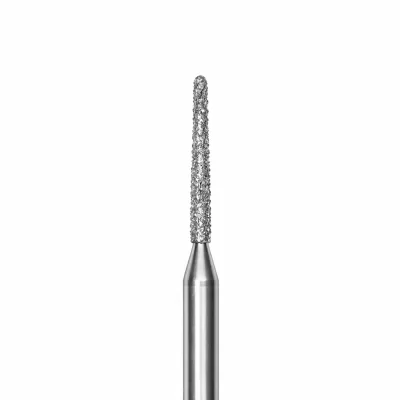
Ultra-precise and thin, the needle bit is used for fine detailing, cleaning under nail art embellishments, or accessing the deepest part of the cuticle fold. Best suited to more experienced techs.
Disc Bit
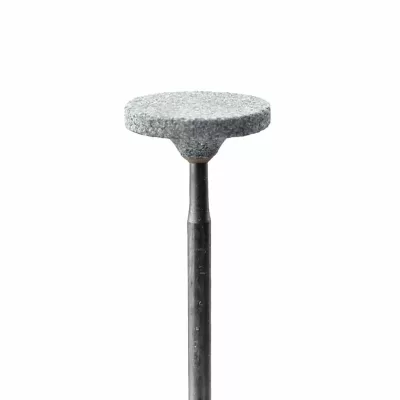
Its flat, wide surface distributes pressure evenly — ideal for buffing the natural nail and refining the smile line on French manicures. Often used as a finishing bit with yellow grit.
Beginner’s Recommended Starter Kit
You don’t need a full collection to get started — just the right combination of shapes and grits. Here’s what we recommend for beginners:
| Bit Shape | Grit Color | Purpose |
|---|---|---|
| Ball / Round | Blue or Green | Cuticle clean-up and sidewall work |
| Barrel / Cylinder | Red or Blue | Surface filing and product smoothing |
| Flame | Blue or Green | Under free edge and cuticle zone |
| Cone / Tapered | Green | Sidewall and proximal fold precision |
| Disk / Football | Yellow | Final buffing and shine |
Safety Tips for Beginners
Using a nail drill for the first time can feel daunting. Keep these fundamentals in mind and you’ll avoid the most common beginner mistakes:
- Always start with a lower speed setting on your nail drill machine. Increase RPM gradually as your confidence grows.
- Keep the bit moving at all times. Holding it in one spot generates heat and can cause discomfort or thin the nail plate.
- Hold the bit parallel to the nail surface when filing — angling it sharply increases the risk of digging in.
- For cuticle work, use very light pressure with fine grit bits (green or blue) — never coarse or extra coarse grits near skin.
- If your client feels heat or discomfort, stop immediately. Overheating can permanently thin and sensitize the nail plate.
- Clean diamond bits regularly with a small bit brush under running water to remove dust and maintain filing performance.
How to Care for Your Diamond Bits
Diamond bits are a long-term investment. With proper care, they’ll deliver consistent, professional results for months or even years:
- Rinse under warm water after every use while scrubbing gently with a cleaning brush to clear filing dust from the diamond surface.
- Between clients, soak in a hospital-grade disinfectant solution to maintain hygiene standards.
- Store bits in a dedicated bit stand or protective case to prevent tips knocking together and the diamond coating from chipping.
- Inspect bits regularly. When the coating wears smooth and the bit glides without filing properly, it’s time to replace it.
- Handle with care — dropping bits on hard surfaces can fracture the diamond particle coating.
Ready to Build Your Bit Collection?
Browse the full Brunson Diamond Nail Drill Bit range — cuticle bits, flame bits, barrel bits, and complete beginner starter sets — available in all six color-coded grits.
Frequently Asked Questions:
Can I use diamond bits on natural nails?
Yes — but stick to fine or extra fine grits ( yellow) and very gentle pressure. Diamond bits are excellent for light natural nail prep before gel application.
What's the difference between diamond and carbide bits?
Diamond bits file by abrasion and are ideal for cuticle care, natural nail work, and fine finishing. Carbide bits cut with metal flutes and excel at heavy product removal, especially thick acrylic. Many professional technicians use both.
Why does my bit keep getting hot?
This usually means you’re moving too slowly, pressing too hard, or your drill speed is too high. Try lowering the RPM, using a lighter touch, and keeping the bit in constant motion across the nail surface.
How often should I replace my diamond bits?
A professional using bits daily may replace them every 3 to 6 months. For home or student use, a well-maintained set can last well over a year.
Are Brunson bits compatible with my nail drill machine?
Yes — all Brunson diamond nail drill bits feature a standard 3/32 inch shank, making them compatible with virtually all professional nail drill machines available on the market.