

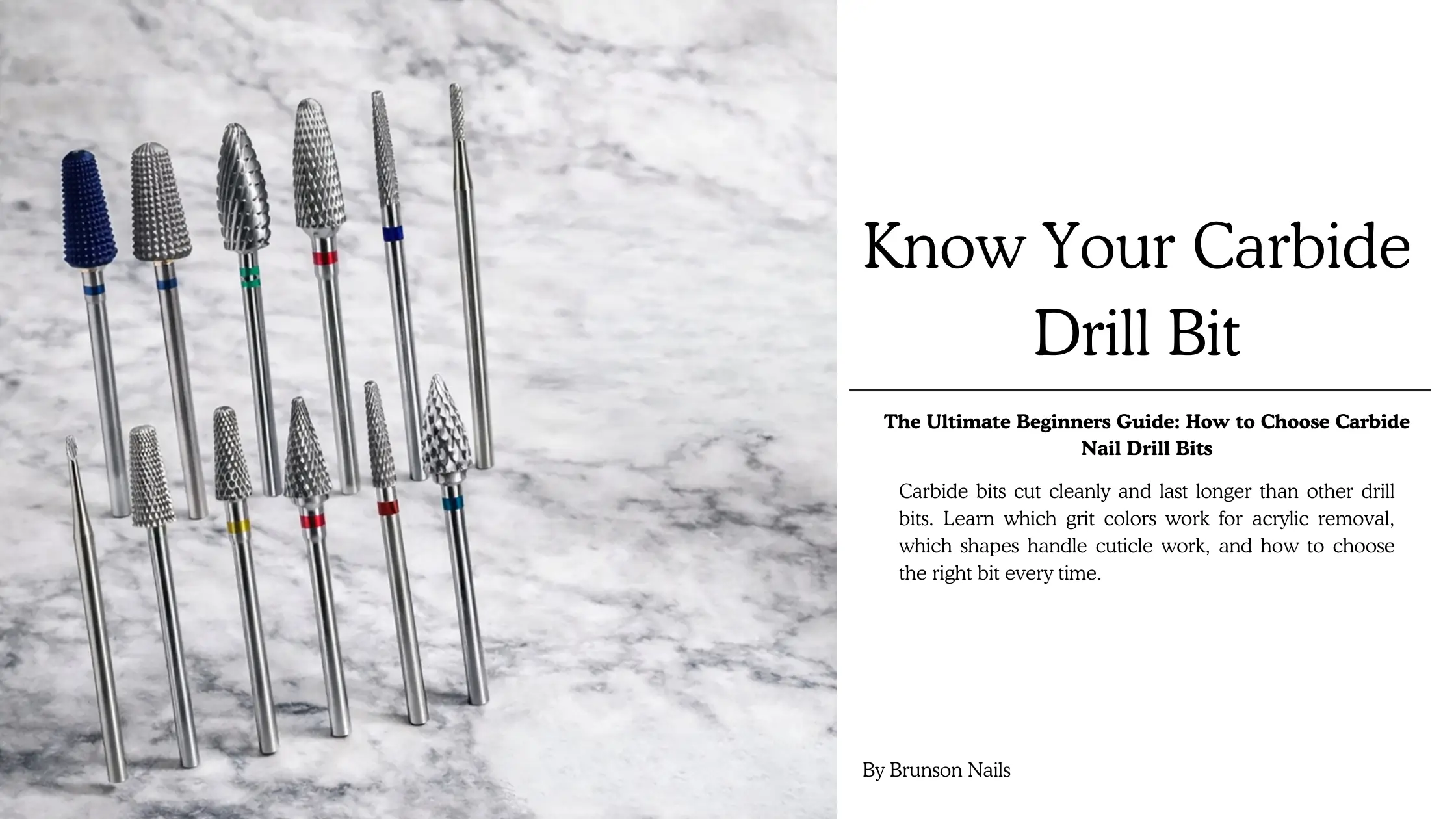
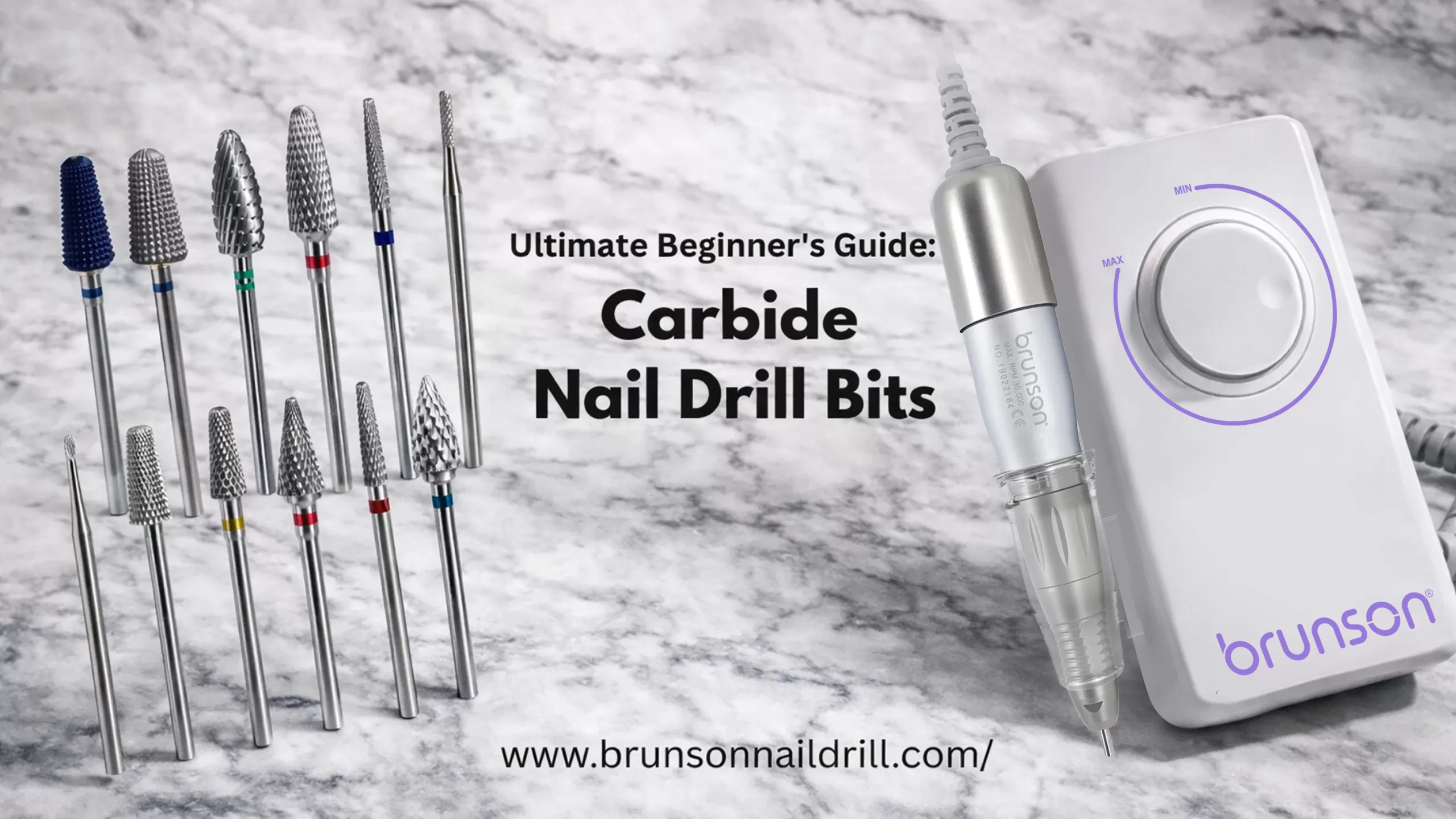
The Ultimate Beginner’s Guide:
How to Choose Carbide Nail Drill Bits
Whether you’re just getting into nail art or starting your journey as a professional nail technician, one of the most confusing purchases you’ll face is choosing the right carbide nail drill bit.
Don’t worry. By the end of this guide, you’ll know exactly what each color means, which shape to reach for, and how to match the right bit to the right task every single time.
What Are Carbide Nail Drill Bits?
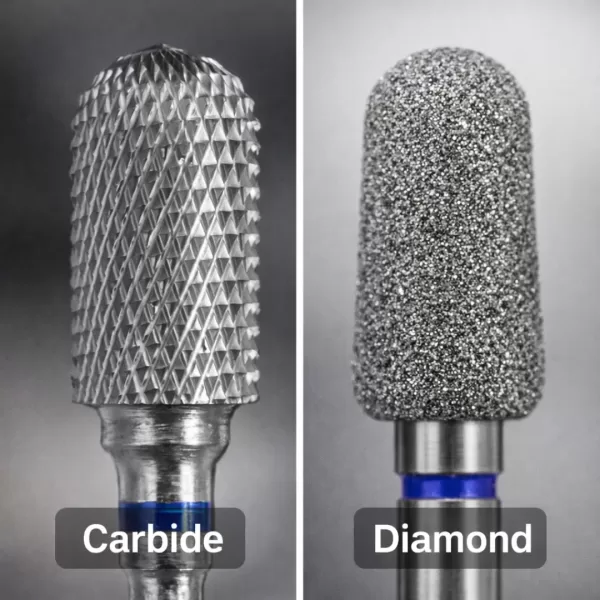
Carbide nail drill bits are precision-machined tools made from tungsten carbide — one of the hardest materials used in professional nail tools. Unlike diamond bits (which are coated with abrasive particles), carbide bits have fluted, blade-like cuts machined directly into the metal. This design allows them to cut cleanly and efficiently without generating excessive heat, making them the preferred choice for removing acrylic, gel, hard gel extensions, and for Russian manicure and cuticle work.
The key advantages of carbide bits over other types are:
Precision — The flute cuts are exact, allowing for controlled filing without slipping or skipping.
Durability — Carbide is extremely hard-wearing. A good quality carbide bit, cleaned and maintained properly, will outlast most other bit types.
Versatility — Carbide bits come in dozens of shapes and grits, covering everything from bulk product removal to delicate cuticle refinement.
Less Heat — Because carbide cuts rather than abrades, it generates significantly less friction heat on the natural nail plate.
The Color-Coded Grit System
Every carbide bit has a colored ring on the shank that tells you exactly how aggressive it is. Here is the official grit chart our educators teach at Brunson Academy:
| Color Band | Grit Range | Use |
|---|---|---|
| ⚫ Black | 80–100 | Extra Coarse |
| 🟢 Green | 100–150 | Coarse |
| 🔵 Blue | 150–180 | Medium |
| 🔴 Red | 180–240 | Fine |
| 🟡 Yellow | 240–360 | Extra Fine |
The golden rule: always work from coarse to fine. Start with the appropriate coarse grit to remove bulk product, then step down through medium, fine, and extra fine to finish. Skipping steps causes heat and scratches that are hard to remove.
Bit Shapes from Our Brunson Collection
Grit tells you how the bit cuts — shape tells you where you use it. Here are the key shapes available in our Brunson carbide range:
Barrel (Cylinder)
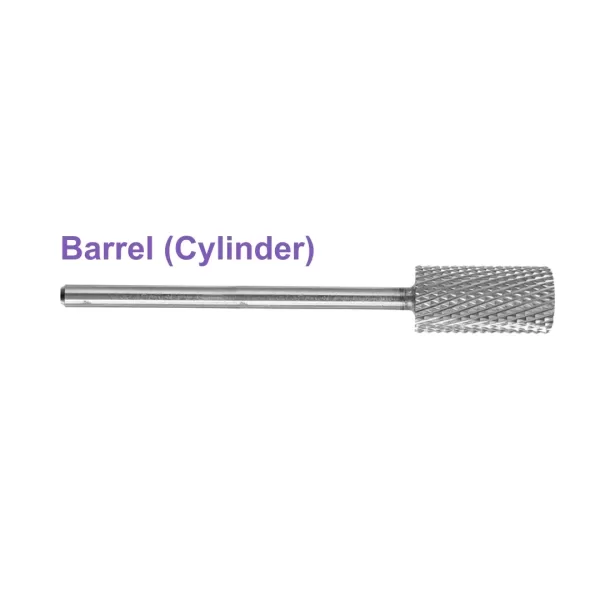
The barrel bit is your go-to all-purpose workhorse. Its flat, cylindrical shape makes it ideal for:
- Removing the bulk of acrylic or hard gel from the nail plate
- Filing and shortening the length of enhancements
- Backfilling the nail during a rebalance
Because of its flat working surface, the barrel is great for working on flat areas of the nail and maintaining consistent contact across the whole plate. Beginners often find barrel bits the easiest to control. If you’re just starting out, this is the shape to get comfortable with first.
Cone (Triangle)
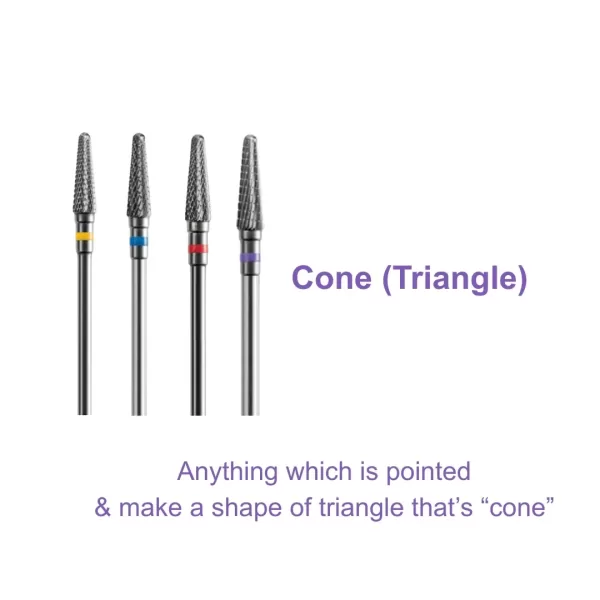
The cone bit tapers to a rounded point, which makes it perfect for precision work in tighter spaces. It excels at:
- Working around and under the sidewalls of the nail
- Cleaning up product from the cuticle area
- Defining the smile line in French nail designs
- Detail work and contouring
Because the tip is narrower, the cone allows you to get into angles and grooves that a barrel simply can’t reach. Use it with care around the cuticle — its pointed shape requires a steady hand.
Flame (Corn)
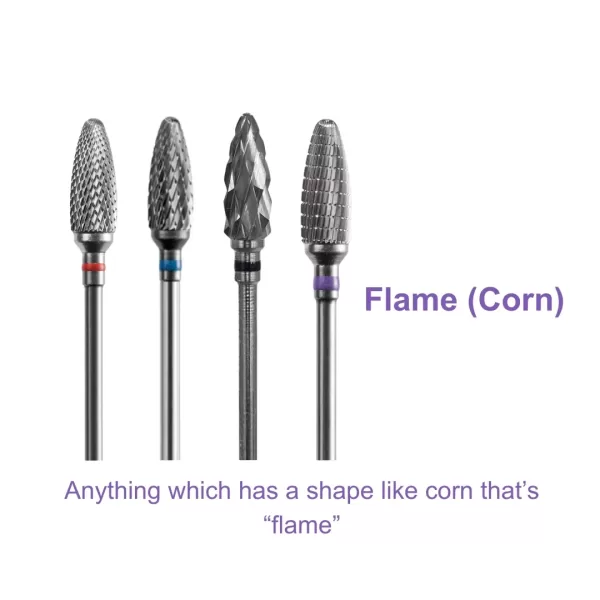
The flame bit is a longer, tapered bit with a rounded tip that resembles — you guessed it — a flame. It’s considered a more advanced shape and is particularly useful for:
- Cuticle area cleanup and lifting lifted product
- Working in the lower arch of the nail near the skin
- Removing product from tight angles along the lateral nail folds
- Detailed finishing work on the sidewalls
The flame bit is popular among experienced nail techs who want maximum control in the cuticle zone. For beginners, it’s best to work up to this shape after you’re comfortable with the barrel and cone.
Which Bits to Start With
If you’re building your first carbide kit, keep it simple:
Start with a blue (medium) cylinder general surface work — it’s the safest all-rounder while you learn pressure and speed control. Add a red (fine) flame to practice cuticle work at a forgiving grit. Pick up a green (coarse) cone or cylinder for enhancement removal practice. And finish every service with a yellow (extra fine) flame or ball bit for a polished, professional surface.
Our Starter Nail Drill Bits Collection (DB7MC5) is the perfect first set — 7 professionally selected bits in one kit. We also carry dedicated Russian Manicure bit collections and Gel & Acrylic Removal sets for those specializing in specific services.
Browse All Brunson Nail Drill Bit Kits: Nail Drill Bit Kits
Common Beginner Mistakes to Avoid
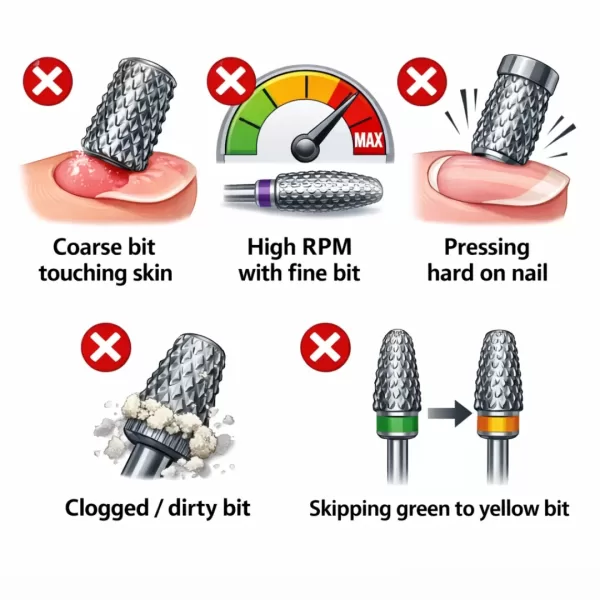
- Using coarse grits near the skin. Green (coarse) and black (extra coarse) bits should never contact skin. Once you move near the cuticle, lateral folds, or proximal fold, always step down to red or yellow.
- Running the drill too fast for the grit. Finer bits need lower RPM. Running a yellow (extra fine / 240–360) bit at high speed creates friction heat without any useful cutting action. Coarser grits can tolerate higher speeds; finer grits should always run slow and steady.
- Applying too much pressure. The bit does the work — not your hand. Let the rotation and the flute (carbide) design do the filing. Pressing harder only risks thinning the nail plate or burning the surrounding skin.
- Not cleaning your bits. Carbide bits load up with product dust during use. A clogged bit won’t cut efficiently, generates excess heat, and wears out prematurely. Always brush out the flutes with a dedicated bit cleaning brush between clients and sterilize according to your professional protocols.
- Skipping grit stages. Jumping straight from green (100–150) to yellow (240–360) means your extra fine finishing bit is fighting against deep scratches it simply cannot remove efficiently. Follow the coarse-to-fine sequence every time — your results will be visibly better.
How to Care for Your Carbide Nail Drill Bits
Carbide bits are a professional investment, and with proper care they can last for years.
Clean after every use with a stiff nail drill bit brush to remove product debris from the flutes. Avoid soaking carbide bits in acetone for extended periods as this can affect the metal over time. Sterilize according to your professional licensing requirements — most carbide bits are autoclave-safe, but always confirm with the manufacturer. Store bits upright in a dedicated bit stand or protective case to prevent tip damage. Inspect your bits regularly — if the flutes look worn or the bit starts dragging rather than cutting cleanly, it’s time for a replacement.
Final Thoughts
Choosing the right carbide nail drill bit always comes down to two things: grit and shape. The color tells you how aggressively the bit cuts; the shape tells you where you can use it. Always follow the Brunson official grit color chart your educators teach, start conservative with medium grits while you’re building confidence, and never rush the coarse-to-fine progression.
Above all — prioritize the health of the natural nail and the safety of the skin around it. A perfectly smooth, undamaged nail is always the goal, no matter what service you’re performing.
At Brunson, every carbide bit in our collection is manufactured to professional standards and color-coded to our official educator’s grit chart, so you always know exactly what you’re working with — whether you’re a student in our academy or a seasoned nail technician upgrading your kit.
👉 Browse the full Brunson Carbide Nail Drill Bit Collection here
Have questions about which bits are right for your services? Visit us in-store or reach out to the Brunson team — we’re always happy to help you nail it.