

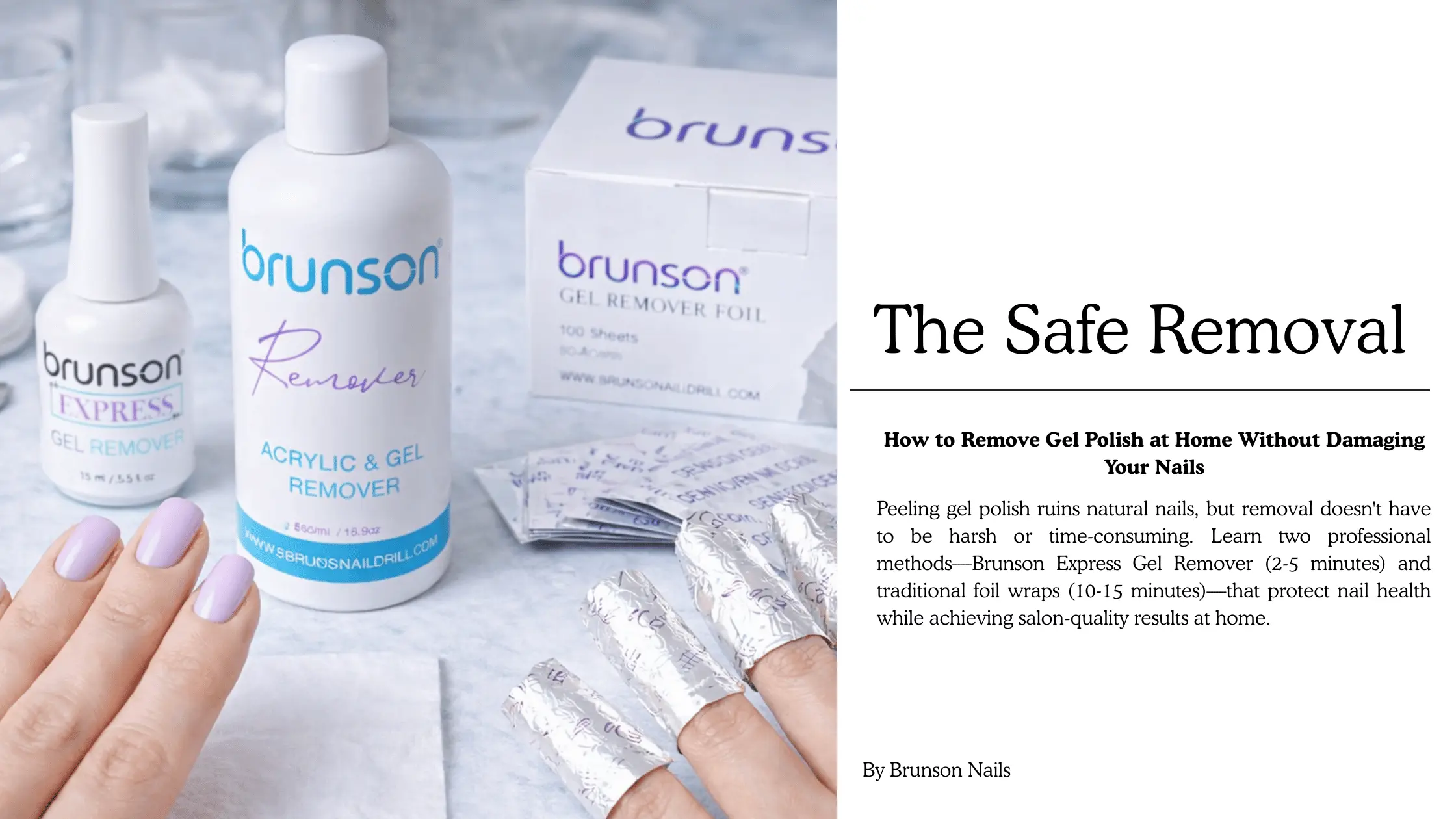
How to Remove Gel Polish : Complete Professional Guide
Quick Answer: Remove gel polish at home using two proven methods: Brunson Express Gel Remover (brush-on, 2-5 minutes) or traditional foil wraps with acetone remover (10-15 minutes). Both methods are effective when done correctly, protecting your natural nails while achieving salon-quality results.
Getting gel polish off at home doesn’t need to damage your nails or take forever. Whether you prefer a quick brush-on solution or the traditional wrap method, understanding the right technique makes all the difference between healthy, strong nails and brittle, peeling ones.
Gel manicures look flawless for weeks—that mirror-like shine, zero chips, and nails that stay perfect through everything. But when it’s time for gel removal, many people struggle with harsh chemicals, endless waiting, and nails that feel stripped and weak afterward.
The problem isn’t gel polish itself. It’s using improper removal techniques that strip moisture, damage the nail plate, and leave cuticles dry and irritated. Picking, peeling, or forcing gel polish off creates the most damage, sometimes taking layers of your natural nail with it.
At Brunson, we’ve developed professional-grade gel removal solutions that work efficiently while protecting nail health. This guide covers both methods—our innovative Express Gel Remover and our professional Nail Foil Wraps—so you can choose what works best for your routine.
Understanding Gel Polish and Why Proper Removal Matters
Gel polish bonds to your natural nail through a curing process under UV or LED light. This creates an extremely durable finish that resists chipping and fading. That same durability makes it challenging to remove without the right approach.
Traditional removal methods use pure acetone to break down the cured gel polymer chains. While effective, acetone is aggressive. It doesn’t just dissolve gel polish—it strips natural oils from your nails and surrounding skin, leading to:
- Brittle, weak nails that break easily
- Peeling nail layers and surface damage
- Dry, irritated cuticles
- White spots or discoloration
- Increased sensitivity
The key to healthy removal is breaking down the gel efficiently while minimizing acetone exposure to your natural nails and skin. This requires proper technique, the right products, and patience during the process.
Method 1: Brunson Express Gel Remover (Fast & Easy)
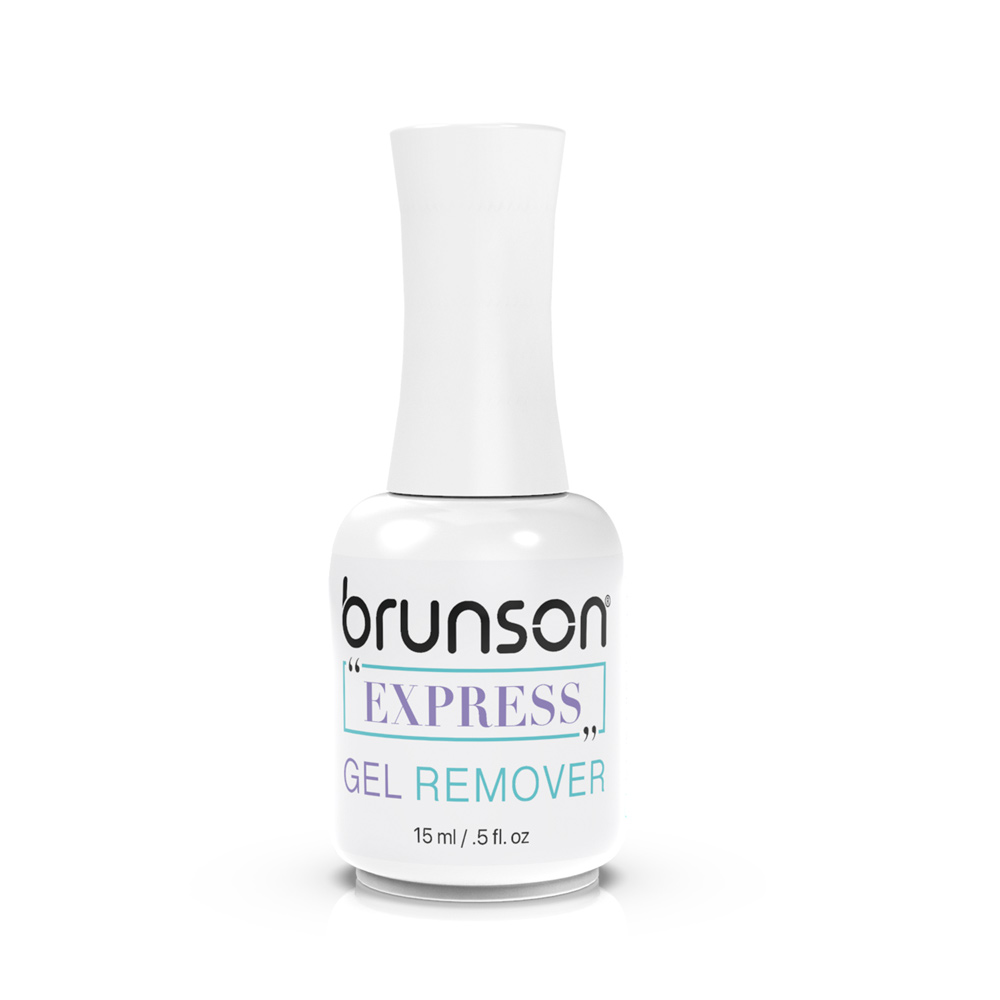
Brunson Express Gel Remover revolutionizes the gel polish removal process with a brush-on formula that works in just 2-5 minutes. This innovative approach delivers acetone exactly where needed—on the gel polish—without unnecessary exposure to your skin and nail bed.
How Express Gel Remover Works
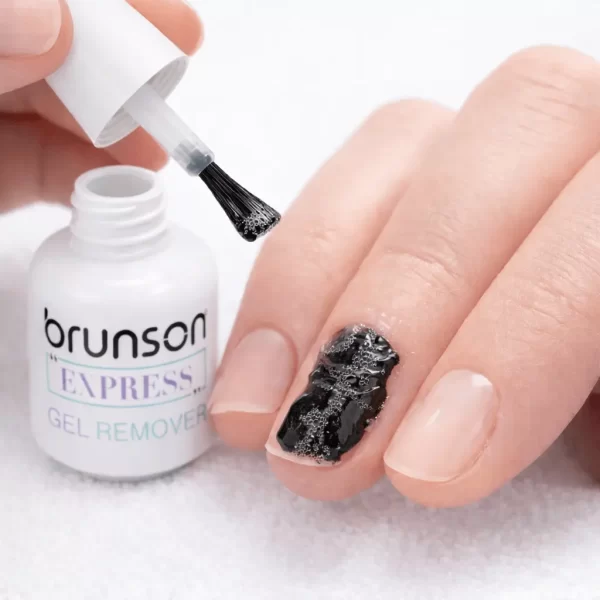
The Express Gel Remover comes in a convenient bottle with a built-in brush, similar to regular gel polish. The fast-acting, acetone-based formula is designed specifically for efficiency. Unlike liquid acetone that evaporates quickly and loses effectiveness, this concentrated gel formula stays in place, penetrating the polish layers thoroughly.
The controlled application means you’re treating only the gel polish itself, not flooding your cuticles and surrounding skin with harsh chemicals. This targeted approach removes polish faster while being gentler on your natural nails.
Important Note: Express Gel Remover works only on soak-off gel polish. It cannot remove builder gel, hard gel, acrylic, polygel, or similar nail enhancements. These products require professional filing for removal.
What You’ll Need
Essential supplies:
- Brunson Express Gel Remover
- Medium-grit nail file or buffer (180-220 grit)
- Lint-free wipes or cotton pads
- Wooden cuticle pusher or orange stick
- Nourishing cuticle oil
- Hand Cream
Check out the video below showing how gel polish is removed using Brunson Express Gel Remover.
Step-by-Step Express Removal Process
-
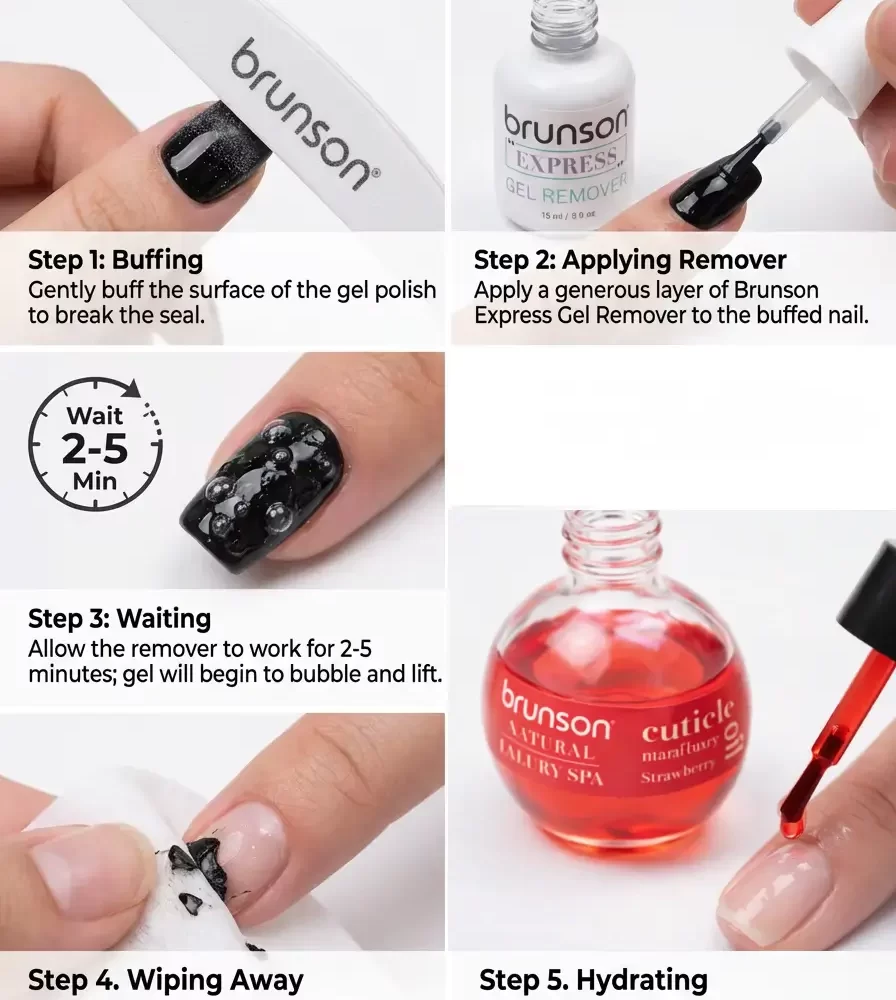
Step 1: Buff the Top Coat
Gently buff the shiny gel surface with a medium-grit buffer until it looks matte. You’re just breaking through the top coat seal, not removing color. Use light strokes and don’t over-file your natural nail.
-
Step 2: Apply Express Gel Remover
Use the brush to paint an even layer over each nail, just like applying regular polish. Cover the entire gel area but avoid flooding your skin. Work on one hand at a time.
-
Step 3: Wait 2-5 Minutes
Let the gel remover work without touching. You’ll see the gel start to lift and wrinkle. Thicker applications need the full 5 minutes. Don’t pick or peel during this time.
-
Step 4: Wipe Away
Gently wipe off the dissolved gel with a cotton pad or lint-free wipe. Use a wooden cuticle pusher for any stubborn bits. If it doesn’t come off easily, apply more remover and wait another 2-3 minutes—never force it.
-
Step 5: Wash and Moisturize
Wash hands with soap and water, then immediately apply cuticle oil to each nail and surrounding skin. Finish with hand cream. This step protects your nails from dryness.
Express Gel Remover Benefits
- Lightning fast: 2-5 minute removal versus 15-20 minutes with traditional soaking
- Precise application: Brush-on formula targets only the gel polish
- Minimal mess: No drips, no spills, no complicated setup
- Convenient: Familiar bottle format, easy to use anywhere
- Reduced exposure: Less acetone contact with skin and natural nails
- Professional results: Complete removal without scraping or damage
Method 2: Brunson Nail Foil Wraps with Acetone Gel Remover (Traditional Method)
For those who prefer the tried-and-true approach, Brunson offers professional-quality Nail Foil Wraps paired with our acetone-based gel polish remover. This traditional method has been used in salons for years because it works reliably when done correctly.
How Foil Wrap Removal Works
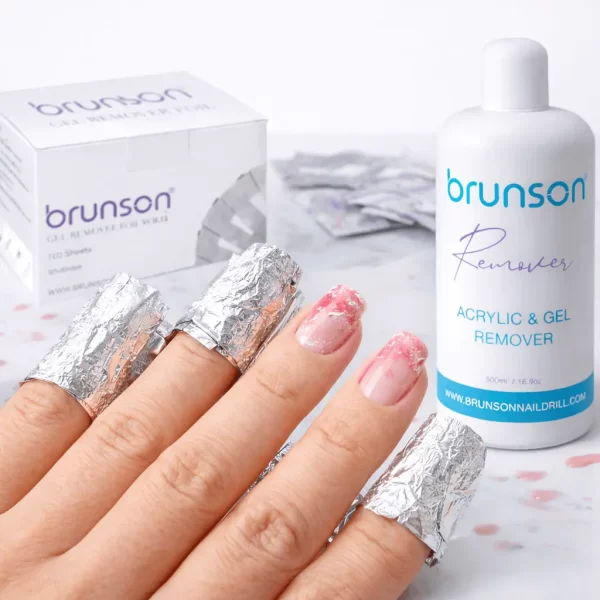
The foil wrap method uses acetone-soaked cotton held against each nail with aluminum foil. The foil creates a seal that prevents acetone evaporation, allowing it to work continuously for the full soak time. This sustained contact breaks down the gel polish polymer bonds, softening it for easy removal.
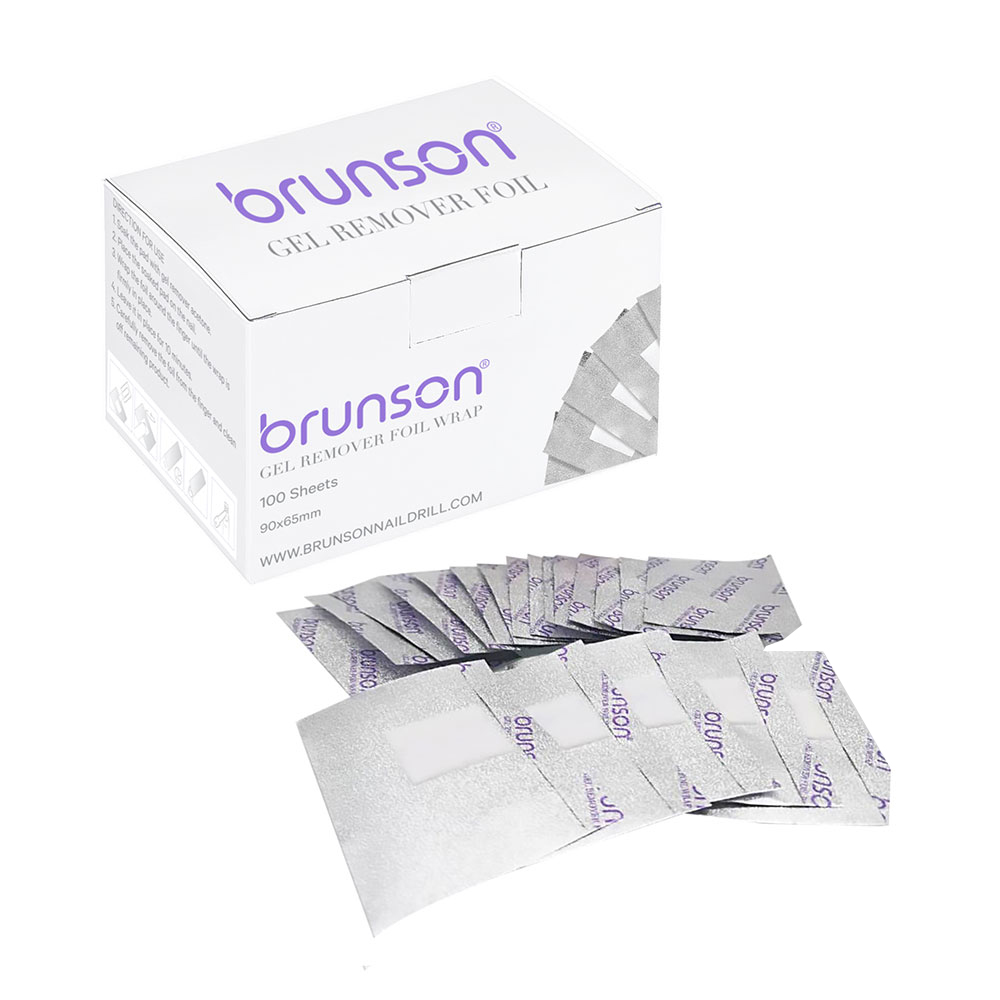
Brunson Nail Foil Wraps are designed specifically for this purpose. They come with pre-cut cotton pads that fit perfectly on each nail, and the foil wraps secure everything in place without the frustration of cutting and folding your own foil.
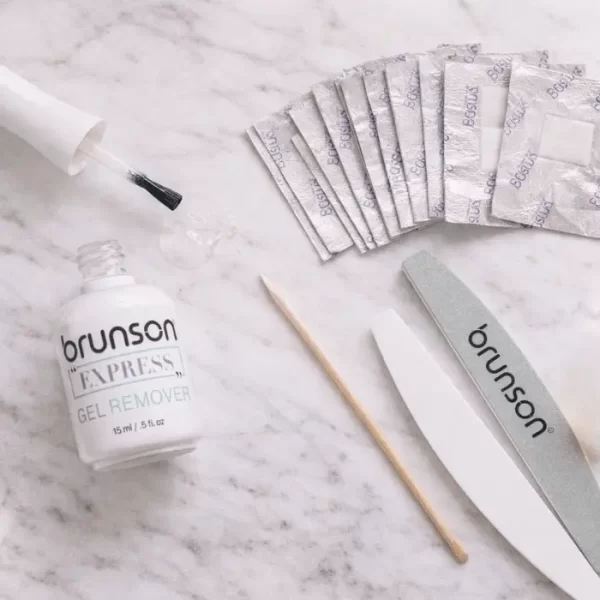
What You’ll Need
Essential supplies:
- Brunson Nail Foil Wraps
- Brunson acetone-based gel polish remover
- Medium-grit nail file or buffer (180-220 grit)
- Wooden cuticle pusher or orange stick
- Nourishing cuticle oil
- Hand Cream
- Timer or phone
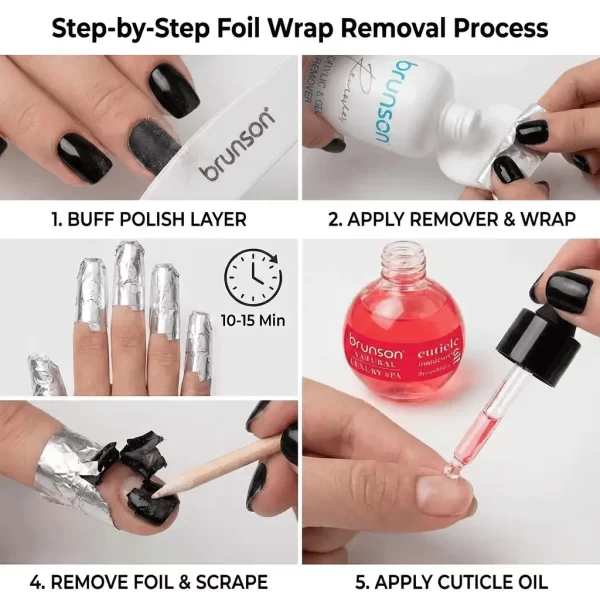
Step-by-Step Foil Wrap Removal Process
-
Step 1: Buff the Top Coat
Buff the gel surface with a medium-grit nail buffer until it looks matte, not shiny. This lets the acetone remover penetrate properly.
-
Step 2: Prepare and Apply Foil Wraps
Saturate the cotton pad inside each Brunson Nail Foil Wrap with acetone-based gel remover. Place the wet cotton directly on your buffed nail and wrap the foil firmly around your fingertip. Do all ten nails, starting with your non-dominant hand.
-
Step 3: Wait 10-15 Minutes
Leave the wraps in place while the acetone breaks down the gel. Thicker or older polish may need the full 15 minutes. Don’t unwrap early—it reduces effectiveness.
-
Step 4: Remove Wraps and Polish
Remove each foil wrap and immediately wipe away the softened gel with the cotton pad. Use a wooden cuticle pusher for any remaining bits. If polish resists, re-wrap that nail with fresh remover for 5 more minutes.
-
Step 5: Wash and Moisturize
Wash hands with soap and water to remove acetone residue. Apply cuticle oil generously to each nail and surrounding skin, then finish with hand cream.
Foil Wrap Method Benefits
- Reliable and proven: Time-tested method used in professional salons
- Complete coverage: Foil wrap ensures even acetone contact across the entire nail
- No special equipment: Works with common supplies most people already have
- Effective on stubborn polish: Extended soak time breaks down even resistant gel
- Good for multiple nails: Wrap all nails at once and remove them systematically
Comparing Both Brunson Removal Methods
| Feature | Express Gel Remover | Foil Wrap Method |
|---|---|---|
| Processing Time | 2-5 minutes | 10-15 minutes |
| Application | Brush-on, direct | Cotton pad + foil wrap |
| Mess Factor | Minimal, contained | Moderate, requires wrapping |
| Skin Exposure | Minimal direct contact | More contact during wrapping |
| Supplies Needed | One bottle | Wraps + remover + cotton |
| Best For | Quick removal, convenience | Thorough removal, heavy gel |
| Ease of Use | Very simple, one-step | Multiple steps, more involved |
Both methods work excellently when used correctly. Your choice depends on personal preference, time constraints, and what feels most comfortable for your routine.
Express Gel Remover is ideal if you value speed and convenience. It’s perfect for busy schedules, travel, or whenever you want the fastest possible removal with minimal setup.
Foil Wraps with acetone remover suit those who prefer traditional methods or need extended soak time for particularly stubborn gel applications. Some people simply prefer this approach because it’s what they’re used to or what they learned first.
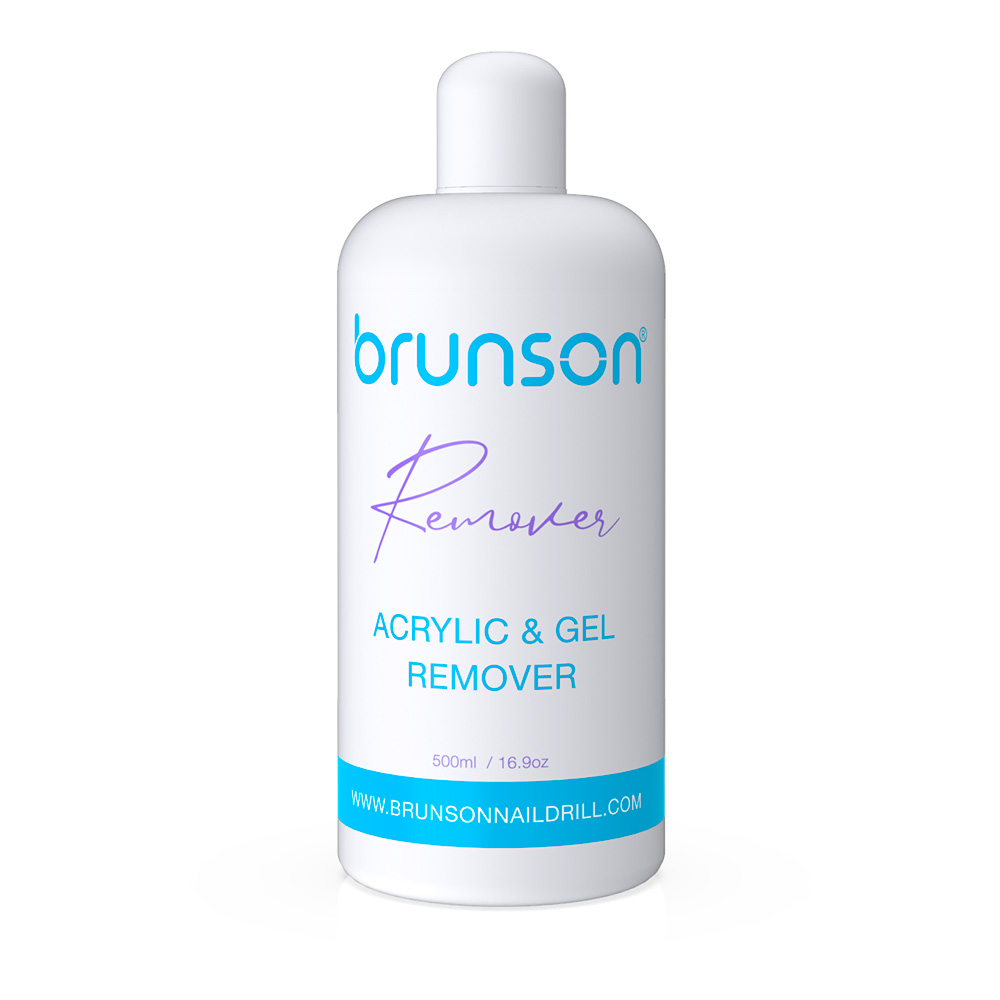
To purchase nail foil, gel polish remover, or express gel polish remover, click below.
Common Mistakes That Damage Nails
- Skipping the buffing step: Without breaking through the top coat, even professional-strength remover can’t penetrate properly. You’ll waste time and product while risking incomplete removal.
- Peeling or picking at gel polish: This single mistake causes more nail damage than anything else. Every time you peel gel, you remove layers of your natural nail plate. The damage accumulates, leading to thin, weak nails that take months to recover.
- Using metal tools: Metal pushers and scrapers easily gouge soft nail plates. Always use wooden orange sticks or soft plastic tools that won’t damage your natural nails if you slip.
- Not moisturizing immediately: Acetone temporarily strips moisture from nails and skin. Skipping post-removal hydration leaves nails vulnerable to peeling, cracking, and breakage.
- Removing gel too frequently: Even gentle removal methods stress nails. If you’re constantly removing and reapplying gel every week, your nails never get a chance to recover. Every 8-12 applications, give your nails a break for at least one week.
- Forcing resistant polish: If gel isn’t sliding off easily, it needs more processing time. Scraping and forcing causes immediate damage that weakens nails for months.
Protecting Nail Health Between Applications
Healthy nails start with daily care habits, not just proper removal technique.
- Daily cuticle oil application: Apply cuticle oil every single day, not just after removal. This thirty-second habit dramatically improves nail strength, flexibility, and growth. Massage it into the nail bed, cuticle, and surrounding skin.
- Quality base coat usage: Always use a nourishing base coat before applying gel color. Quality base coats create a protective barrier between your natural nail and gel polish, reducing impact from both application and future removal.
- Proper nutrition for nail health: Nails reflect overall health. Biotin-rich foods like eggs, nuts, sweet potatoes, and salmon support nail strength from within. While supplements help some people, whole food sources provide biotin along with other beneficial nutrients.
- Moderate nail length: Keep nails at a comfortable, practical length, especially during recovery periods. Longer nails experience more stress and break more easily. Moderate length allows nails to strengthen without constant breakage.
- Hydration matters: Drink adequate water and use hand cream regularly. Well-hydrated nails are more flexible and less prone to cracking or peeling.
Professional Tips for Best Results
- Work in a well-ventilated area: Acetone fumes can be strong. Open windows or turn on a fan to keep air circulating. This makes the process more comfortable and safer.
- Protect your workspace: Lay down a towel or disposable pad before starting. Acetone can damage certain surfaces, and this protects your table or counter from any spills or drips.
- Don’t rush the process: Whether using Express Gel Remover or foil wraps, give the product adequate time to work. Rushing leads to incomplete removal and potential nail damage from excessive scraping.
- Examine your nails post-removal: Look for any thin spots, ridges, or damage. If you notice issues, give your nails a break before your next gel application. Continuing to apply gel to damaged nails compounds the problem.
- Consider professional removal occasionally: Even with excellent at-home products, visiting a nail technician periodically can be beneficial. They can assess your nail health, properly remove stubborn gel, and provide professional care that gives your nails a fresh start.
- Keep a nail care kit ready: Having all your supplies organized and accessible makes removal smoother. You won’t be searching for tools mid-process with half-cleaned nails, which leads to mistakes.
- Temperature matters: Warm hands allow remover to work more effectively. If your hands are cold, warm them under running water for a minute before starting. This speeds up the chemical process.
Looking for more professional nail care essentials?
Brunson offers a complete range of manicure tools, gel nail polish, nail drills, and all the nail art supplies you need for salon-quality results at home. From application to removal, we’ve got you covered with premium products trusted by professionals.
Want to master professional nail techniques? Brunson Nail Academy offers comprehensive nail courses for beginners and experienced technicians alike. Whether you’re starting your nail career or expanding your skills, our expert-led nail training will take your abilities to the next level. Click here to explore Brunson Nail Course and start your journey today.
Frequently Asked Questions:
How long does gel polish removal take with each method?
Express Gel Remover takes approximately 10-15 minutes total for both hands, including prep and cleanup. The active removal time is just 2-5 minutes. Foil wrap method takes 20-25 minutes total, with 10-15 minutes of soak time.
What if some polish still won't come off after the recommended time?
Apply additional remover to resistant spots. With Express Gel Remover, brush on another coat and wait 2-3 more minutes. With foil wraps, re-saturate the cotton and wrap for another 5 minutes. Thick gel applications or multiple layers sometimes need a second treatment. Never scrape or force polish off—be patient.
Is Brunson remover safe for sensitive skin?
Both products contain acetone, which can irritate sensitive skin. Minimize contact by applying petroleum jelly around your nails before starting. Express Gel Remover’s targeted brush application naturally reduces skin exposure compared to foil wraps. Always wash thoroughly after removal and moisturize immediately.
How often can I safely remove and reapply gel polish?
Most people reapply gel every 2-3 weeks when growth becomes visible. However, your nails need breaks. Every 3-4 gel applications, let your nails go bare for at least one week to recover. Watch for signs of damage—if nails seem thin, weak, or are peeling, take a longer break.
Will these gel polish removal methods work on all gel polish brands?
Yes, both Brunson removal methods work on all standard soak-off gel polish formulas, regardless of brand. The chemistry that makes gel polish durable is similar across brands, so acetone-based removers work universally. However, some brands may take slightly longer depending on their specific formulation.
Why is buffing the top coat so important?
The gel top coat is designed to be extremely durable and resistant to everything—including removal products. Without breaking through this seal, remover cannot penetrate the color layers underneath efficiently. Buffing the surface allows remover to reach and break down the actual gel polish.
Can I remove gel polish without acetone?
While some non-acetone methods exist, they’re generally less effective and take significantly longer. Acetone-based removers are the industry standard because they work efficiently. The key is using them properly to minimize nail damage—which is exactly what Brunson products are designed for.
What's the white, chalky look on my nails after removal?
This dehydration effect is normal after any acetone exposure. It means your nails have lost moisture. The solution is immediate, thorough moisturizing with cuticle oil and hand cream. The white appearance should fade within hours as your nails reabsorb moisture. If it persists, your nails may need a break from gel.
How do I store gel remover to keep it effective?
Keep both Express Gel Remover and acetone remover tightly sealed when not in use. Store in a cool, dry place away from direct sunlight and heat sources. Acetone evaporates quickly when exposed to air, so proper sealing maintains effectiveness. If your remover thickens significantly or seems less effective, it’s time to replace it.
Can I reuse foil wraps?
While you technically could, foil wraps become crumpled and less effective after one use. Fresh wraps ensure proper fit and seal, which is critical for preventing acetone evaporation. Brunson Nail Foil Wraps are affordable enough that using fresh ones each time is worthwhile for best results.